|
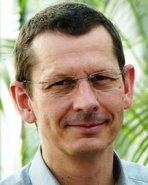
Michael Schulz Professor for Geosystem Modeling
MARUM - Center for Marine Environmental Sciences
Fon: +49-421-218-65444 |
For further information on our research see: |
|
1. Using numerical models of varying complexity to study
- the origin of climate variations at millennial-to-interdecadal timescales, 2. Software development for time-series analysis of unevenly spaced data. |
back to top
2010 2009 2008 2007 2006 2005 2004 2003 2002 2001 2000 and before
Merkel, U., Prange, M. and Schulz, M. (2010): ENSO variability and teleconnections during glacial climates. Quaternary Science Reviews, 29, 86-100. Reprint
Timmermann, A., Menviel, L., Okumura, Y., Schilla, A., Merkel, U., Timm, O., Hu, A., Otto-Bliesner, B. and Schulz, M. (2010): The bipolar seesaw revisited. Quaternary Science Reviews, 29, 74-85. Reprint
Prange, M., J. Jongma, and M. Schulz (2010): Centennial-to-millennial-scale Holocene climate variability in the North Atlantic region induced by noise. In: Stochastic Physics and Climate Modelling, edited by: Palmer, T. and Williams, P., Cambridge University Press, 307-326. Reprint
Niedermeyer, E. M., Prange, M., Mulitza, S., Mollenhauer, G., Schefuß, E. and Schulz, M. (2009): Extratropical forcing of Sahel aridity during Heinrich stadials. Geophys. Res. Lett., 36, L20707, doi:10.1029/2009GL039687. Reprint
Langebroek, P., A. Paul, and M. Schulz (2009): Antarctic ice-sheet response to atmospheric CO2 and insolation in the Middle Miocene. Climate of the Past, 5, 633-646. Reprint
Fraile, I., Schulz, M., Mulitza, S., Merkel, U., Prange, M. and Paul, A. (2009): Modeling the seasonal distribution of planktonic foraminifera during the Last Glacial Maximum. Paleoeceanography, 24, PA2216, doi:10.1029/2008PA001686. Reprint
Fraile, I., S. Mulitza, and M. Schulz (2009): Modeling planktonic foraminiferal seasonality: Implications for sea-surface temperature reconstructions. Marine Micropaleontology, 72, 1-9. Reprint
Jones, P. D., K. R. Briffa, T. J. Osborn, J. M. Lough, T. D. v. Ommen, B. M. Vinther, J. Luterbacher, E. R. Wahl, F. W. Zwiers, M. E. Mann, G. A. Schmidt, C. M. Ammann, B. M. Buckley, K. M. Cobb, J. Esper, H. Goosse, N. Graham, E. Jansen, T. Kiefer, C. Kull, M. Küttel, E. Mosley-Thompson, J. T. Overpeck, N. Riedwyl, M. Schulz, A. W. Tudhope, R. Villalba, H. Wanner, E. Wolff, and E. Xoplaki (2009): High-resolution paleoclimatology of the last millennium: a review of current status and future prospects. The Holocene, 19, 3-49. Reprint
Mulitza, S., M. Prange, J.-B. W. Stuut, M. Zabel, T. von Dobeneck, A. C. Itambi, J. Nizou, M. Schulz, and G. Wefer (2008): Sahel megadroughts triggered by glacial slowdowns of Atlantic meridional overturning. Paleoceanography, 23, PA4206, doi:10.1029/2008PA001637. Reprint
Franke, J., M. Schulz, A. Paul, and J. Adkins (2008): Assessing the Ability of the 14C Projection-Age Method to Constrain the Circulation of the Past in a 3D Ocean Model. Geochem. Geophys. Geosys., 9, Q08003, doi:10.1029/2008GC001943. Reprint
Franke, J., A. Paul, and M. Schulz (2008): Modeling variations of marine reservoir ages during the last 45,000 years. Clim. Past, 4, 125-136. Reprint / Supplementary Material / Online Reservoirage Database
Fraile, I., M. Schulz, S. Mulitza, and M. Kucera (2008): Predicting the global distribution of planktonic foraminifera using a dynamic ecosystem model. Biogeosciences, 5, 891-911. Reprint
Holbourn, A., W. Kuhnt, M. Schulz, J.-A. Flores and N. Andersen (2007): Orbitally-paced climate evolution during the middle Miocene "Monterey" carbon-isotope excursion. Earth Planet. Sci. Lett., 261, 534-550. Reprint
Jongma, J. I., M. Prange, H. Renssen, and M. Schulz (2007): Amplification of Holocene multicentennial climate forcing by mode transitions in North Atlantic overturning circulation. Geophysical Res. Lett., 34, L15706, doi:10.1029/2007GL030642. Reprint / Supplementary Material
Schulz, M., Prange, M., and A. Klocker (2007): Low-frequency oscillations of the Atlantic Ocean meridional overturning circulation in a coupled climate model. Climate of the Past, 3, 97-107. Reprint
Steph, S., R. Tiedemann, M. Prange, J. Groeneveld, D. Nürnberg, L. Reuning, M. Schulz, and G. Haug (2006): Changes in Caribbean surface hydrography during the Pliocene shoaling of the Central American Seaway. Paleoceanography, 21, PA4221, doi:10.1029/2004PA001092. Reprint
Sima, A., A. Paul, M. Schulz and H. Oerlemans (2006): Modeling the oxygen-isotopic composition of the North American Ice Sheet and its effect on the isotopic composition of the ocean during the last glacial cycle. Geophys. Res. Lett., 33, L15706, doi:10.1029/2006GL026923. Reprint / Supplementary Material
Zaric, S., Schulz, M. and Mulitza, S. (2006): Global prediction of planktic foraminiferal fluxes from hydrographic and productivity data. Biogeosciences, 3, 187-207. Reprint
Holbourn, A., Kuhnt, W., Schulz, M. and Erlenkeuser, E. (2005): Impacts of orbital forcing and atmospheric carbon dioxide on Miocene ice-sheet expansion. Nature, 438, 483-487. Reprint / Supplementary Material
Beckmann, B., Flögel, S., Hofmann, P., Schulz, M. and Wagner, T. (2005): Orbital forcing of Cretaceous river discharge in tropical Africa and ocean response. Nature, 437, 241-244. Reprint / Supplementary Material Klocker, A., M. Prange and M. Schulz (2005): Testing the influence of the Central American Seaway on orbitally forced northern hemisphere glaciation. Geophys. Res. Lett., 32(3), L03703, 10.1029/2004GL021564. Reprint
Jiang, H., J. Eiriksson, M. Schulz, K.-L. Knudsen and M. S. Seidenkrantz (2005): Evidence for solar forcing of sea-surface temperature on the North Icelandic shelf during the late Holocene. Geology, 33, 73-76. Reprint Holbourn, A., W. Kuhnt, and M. Schulz (2004): Orbitally paced climate variability during the middle Miocene: High-resolution benthic stable isotope records from the tropical western Pacific. In Continent-ocean interactions within east Asian marginal seas, edited by Clift, P., W. Kuhnt, P. Wang and D. Hayes, pp. 321-337, American Geophysical Union, Washington DC. Reprint
Schulz, M., Paul, A. and Timmermann, A. (2004): Glacial-Interglacial Contrast in Climate Variability at Centennial-to-Millennial Timescales: Observations and Conceptual Model. Quat. Sci. Rev., 23, 2219-2230. Reprint
Prange, M. and M. Schulz (2004): A coastal upwelling-seesaw in the Atlantic Ocean as a result of the closure of the Central American Seaway. Geophys. Res. Lett., 31(17), L17207, 10.1029/2004GL020073. Reprint / Accompanying Pages Newsletter Article
Sima, A., A. Paul and M. Schulz (2004): The Younger Dryas -- an intrinsic feature of late Pleistocene climate change at millennial timescales. Earth Planet. Sci. Lett., 222, 741-750. Reprint
Schulz, M. and Paul, A. (2004): Sensitivity of the ocean-atmosphere carbon cycle to ice-covered and ice-free conditions in the Nordic Seas during the Last Glacial Maximum. Palaeogeography, Palaeoclimatology, Palaeoecology, 207,127-141. Reprint Sarnthein, M., van Kreveld, S., Erlenkeuser, H., Grootes, P.M., Kucera, M., Pflaumann, U. and Schulz, M. (2003): Centennial-to-millennial-scale periodicities of Holocene climate and sediment injections off the western Barents shelf, 75°N. Boreas, 32, 447-461. Reprint
Pahnke, K., R. Zahn, H. Elderfield and M. Schulz (2003): 340,000 Year centennial-scale marine record of southern hemisphere climatic oscillation. Science, 301, 948-952. Reprint / Supplementary Material
Timmermann, A., Gildor, H., Schulz, M. and Tziperman, E. (2003): Coherent resonant millennial-scale climate oscillations triggered by massive meltwater pulses. Journal of Climate, 16, 2569-2585. Reprint Schulz, M., Paul, A. and Timmermann, A. (2002): Relaxation oscillators in concert: A framework for climate change at millennial timescales during the late Pleistocene. Geophys. Res. Lett., 29 (24), 10.1029/2002GL016144. Reprint
Kiefer, T., Lorenz, S., Schulz, M., Lohmann, G., Sarnthein, M. and Elderfield, H. (2002): Response of precipitation over Greenland and the adjacent ocean to North Pacific warm spells during Dansgaard-Oeschger stadials. Terra Nova, 14, 295-300. Reprint Schulz, M. (2002): On the 1470-year pacing of Dansgaard-Oeschger warm events. Paleoceanogr., 17 (3), 10.1029/2000PA000571. Reprint Schulz, M. and Mudelsee, M. (2002): REDFIT: estimating red-noise spectra directly from unevenly spaced paleoclimatic time series. Comput. Geosci., 28, 421-426. Reprint / download programm Schulz, M. (2002): The tempo of climate change during Dansgaard-Oeschger interstadials and its potential to affect the manifestation of the 1470-year climate cycle. Geophys. Res. Lett., 29 (1), 10.1029/2001GL013277. Reprint Schulz, M. and Paul, A. (2002): Holocene climate variability on centennial-to-millennial time scales: 1. Climate records from the North-Atlantic realm. In: Wefer, G., Berger, W. H., Behre, K.-E. and Jansen, E. (eds.), Climate development and history of the North Atlantic Realm. Springer Verlag, Berlin, 41-54. Reprint Paul, A. and Schulz, M. (2002): Holocene climate variability on centennial-to-millennial time scales: 2. Internal feedbacks and external forcings as possible causes. In: Wefer, G., Berger, W. H., Behre, K.-E. and Jansen, E. (eds.), Climate development and history of the North Atlantic Realm. Springer Verlag, Berlin, 55-73. Reprint Schulz, M., Berger, W. H., Baillie, M., Luterbacher, J., Meincke, J., Negendank, J. F. W., Paul, A. and Ramseier, R. O. (2002): Tracing climate-variability: the search for climate dynamics on decadal to millennial time scales. In: Wefer, G., Berger, W. H., Behre, K.-E. and Jansen, E. (eds.), Climate development and history of the North Atlantic Realm. Springer Verlag, Berlin, 125-148. Reprint Hinnov, L. A., Schulz, M. and Yiou, P. (2002): Interhemispheric space-time attributes of the Dansgaard-Oeschger oscillations between 100 and 0 ka. Quat. Sci. Rev., 21, 1213-1228. Reprint / Supplementary Material Helmke, J. P., Schulz, M. and Bauch, H. A. (2002): Sediment-color record from the northeast Atlantic reveals patterns of millennial-scale climate variability during the past 500,000 years. Quat. Res., 57, 49-57. Reprint Sarnthein, M., Stattegger, K., Dreger, D., Erlenkeuser, H., Grootes, P., Haupt, B. J., Jung, S., Kiefer, T., Kuhnt, W., Pflaumann, U., Schäfer-Neth, C., Schulz, H., Schulz, M., Seidov, D., Simstich, J., van Kreveld, S., Vogelsang, E., Völker, A. and Weinelt, M. (2001): Fundamental modes and abrupt changes in North Atlantic circulation and climate over the last 60 ky - Concepts, reconstructions and numerical modeling. In: Schäfer, P., Ritzrau, W., Schlüter, M. and Thiede, J. (eds.), The Northern North Atlantic: A changing environment. Springer Verlag, Berlin, 365-410. Reprint Schulz, M., Seidov, D., Sarnthein, M. and Stattegger, K. (2001): Modeling ocean-atmosphere carbon budgets during the Last Glacial Maximum - Heinrich 1 Meltwater Event - Bølling transition. Int. Journ. Earth Sciences, 90, 412-425. Reprint Lohmann, G. and Schulz, M. (2000): Reconciling Bølling warmth with peak deglacial meltwater discharge. Paleoceanogr., 15, 537-540. Reprint Hay, W. W., DeConto, R. M., Wold, C. N., Wilson, K. M., Voigt, S., Schulz, M., Rossby-Wold, A., Dullo, W.-C., Ronov, A. B., Balukhovsky, A. N. and Söding, E. (1999): Alternative global Cretaceous paleogeography. In: Barrera, E. and Johnson, C. C. (eds.), Evolution of the Cretaceous ocean-climate system, Special Paper, 332. Geol. Soc. Amer., Boulder, 1-47. Reprint Schulz, M., Berger, W. H., Sarnthein, M. and Grootes, P. M. (1999): Amplitude variations of 1470-year climate oscillations during the last 100,000 years linked to fluctuations of continental ice mass. Geophys. Res. Lett., 26, 3385-3388. Reprint Mudelsee, M. and Schulz, M. (1997): The Mid-Pleistocene climate transition: onset of 100 ka cycle lags ice volume build-up by 280 ka. Earth Planet. Sci. Lett., 151, 117-123. Reprint Schulz, M. and Stattegger, K. (1997): SPECTRUM: Spectral analysis of unevenly spaced paleoclimatic time series. Comput. Geosci., 23, 929-945. Reprint / download program Schulz, M. and Schäfer-Neth, C. (1997): Translating Milankovitch climate forcing into eustatic fluctuations via thermal deep water expansion: a conceptual link. Terra Nova, 9, 228-231. Reprint Schulz, M., Wold, C. N., Ronov, A. B. and Hay, W. W. (1995): A forward and inverse transformation program for the 'Atlas of Lithological-Palaeogeographical Maps of the World'. Comput. Geosci, 21, 907-911. Reprint / download program Schulz, M., Mudelsee, M. and Wolf-Welling, T. C. W. (1994): Fractal analyses of Pleistocene marine oxygen isotope records. In: Kruhl, J. H. (ed.), Fractals and dynamic systems in geosciences. Springer Verlag, Berlin, 307-317. Reprint
Pollard, D. and Schulz, M. (1994): A model for the potential locations of Triassic evaporite basins driven by paleoclimatic GCM simulations. Glob. Planet. Change, 9, 233-249. Reprint
Steph, S., R. Tiedemann, M. Prange, J. Groeneveld, M. Schulz, A. Timmermann, D. Nürnberg, C. Saukel, and G. H. Haug (in press): Early Pliocene increase in thermohaline overturning preconditioned the development of the modern equatorial Pacific cold tongue. Paleoceanography.
Langebroek, P., A. Paul, A. and M. Schulz (submitted): Simulating the sea-level imprint on marine oxygen-isotope records during the Middle Miocene using an ice sheet-climate model.
Prange, M., S. Steph, M. Schulz, and L. Keigwin (submitted): Inferring moisture transport across Central America: Can modern analogs of climate variability help reconcile paleosalinity records?
Johnstone, H. J. H., M. Schulz, J. Yu, and H. Elderfield (submitted): Inside story: An X-ray microtomography method for assessing dissolution in foraminifera tests.
Johnstone, H. J. H., J. Yu, H. Elderfield, and M. Schulz (submitted): Calibrating X-ray computed tomography based dissolution index (XDX) to dissolution bias of Mg/Ca in planktonic foraminifera.
Johnstone, H. J. H., W. Lee, T. Kiefer, M. Schulz, and H. Elderfield (submitted): Effect of preservation state of planktonic foraminifera tests on the decrease in Mg/Ca due to reductive cleaning and on analytical yield.
Felis, T., U. Merkel, R. Asami, P. Deschamps, E. C. Hathorne, M. Kölling, E. Bard, G. Cabioch, N. Durand, M. Prange, M. Schulz, S. Y. Cahyarini, and M. Pfeiffer (submitted): Enhanced El Niño-Southern Oscillation variability at the end of the last glacial.
Berger, W. H., Schulz, M. and Wefer, G. (submitted): Quaternary Oceans and Climate Change: Lessons for the Future?
SPECTRUM: Spectral analysis of unevenly spaced time series
A menu-driven PC program that allows the analysis of unevenly spaced time series in the frequency domain. The program is based on the Lomb-Scargle Fourier transform for unevenly spaced data in combination with the Welch-Overlapped-Segment-Averaging procedure. SPECTRUM can perform: 1) harmonic analysis (detection of periodic signal components), 2) spectral analysis of single time series and 3) cross-spectral analysis (cross-amplitude-, coherency- and phase-spectrum). Cross-spectral analysis does not require a common time axis of the two processed time series. 4) Analytical results are supplemented by statistical parameters that allow the evaluation of the results. During the analysis a user is guided by a variety of messages. 5) Results are displayed graphically and can be saved as plain ASCII or PCX files. 6) Additional tools for visualizing time series data and sampling intervals, integrating spectra and measuring phase angles facilitate the analysis. Compared to the widely used Blackman-Tukey approach for spectral analysis of paleoclimatic data, the advantage of SPECTRUM is the avoidance of any interpolation of the time series.
Paleoclimatic time series are commonly unevenly spaced in time, making it difficult to obtain an accurate estimate of their typical red-noise spectrum. This Fortran 90 program overcomes this problem by fitting a first-order autoregressive (AR1) process, being characteristic for many climatic processes, directly to unevenly spaced time series. Hence, interpolation in the time domain and its inevitable bias can be avoided. The program can be used to test if peaks in the spectrum of a time series are significant against the red-noise background from an AR1 process.
ENVELOPE: Envelope estimation from unevenly spaced time series
Version 1.4: Binaries for DOS and Turbo Pascal source code
|
| 1987-1994: | Studies of Marine Geology (Univ. Kiel) and Marine Geotechnics (Univ. Bangor, Wales) |
| 1995-1998: | Doctoral Studies (Paleoceanographic Modeling), Univ. Kiel |
| 1998-2001: | Postdoc at Inst. for Geoscienes (Univ. Kiel), Scripps Institution of Oceanogaphy (La Jolla), and Meteorological Inst. (Univ. Hamburg) |
| 2001-2002: | Junior Lecturer at Inst. for Geosciences (Univ. Kiel) |
| since 2002: | Professor for Geosystem Modeling (Univ. Bremen) |